
What makes a good record?

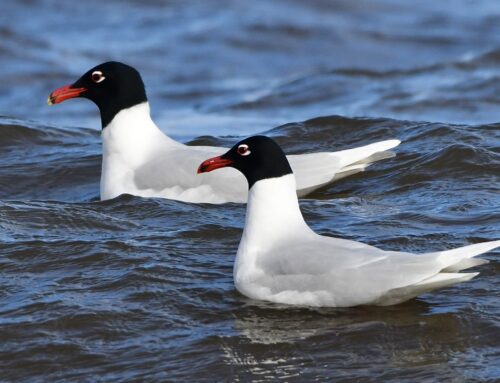
In the breeding season, two closely consorting Pintail like these should definitely be reported as a Pair, not simply as two birds! Credit: Colin Bradshaw.
We have recently posted a video and accompanying blog on how to submit records of rare breeding birds to help the work of the Rare Breeding Birds Panel, and through that to support the conservation of the many species of rare breeding birds on which we work.
This is a follow up on what information these records, however they are submitted, should contain to be as useful as possible. To give a couple of examples, there’s nothing more frustrating than a receiving a record without precise location details, so it’s impossible to tell whether a record refers to the same or different birds to those reported by another birder – and in addition the record will be of less value for conservation purposes. Or a receiving report of two individuals in the breeding season without the details whether it’s two males, two females or, more excitingly, a pair.
A good record should include species – obviously! – date or dates, precise location, the number of birds, what breeding evidence was observed, any information on productivity, and any other relevant contextual information.
Let’s go through these in a little more detail:
Species – obviously you can’t submit a record without this. It’s worth genning up on the RBBP’s list so you know which species to look out for, and remember we cover rare breeding subspecies such as White Wagtail, and non-native species such as Red-crested Pochard.
Dates – include at least first and last dates of observations, but it’s better to include all dates. If you’re using a online portal/app such as BirdTrack this will be done automatically.

A pin dropped in the BirdTrack app, giving the exact location of a breeding record
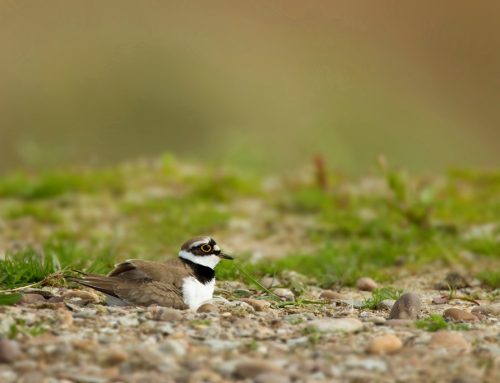
Location – be precise! Use a good location name – the accepted name for a well-known birdwatching location such as a nature reserve, or the nearest landmark or village. Also be precise by providing an OS grid reference. Please give at least a 4-figure reference, which gives the 1-km square (e.g. I live in NU1712). Better still, particularly if there’s an obvious territory-centre or nest site, a 6-figure reference (e.g. NU178129) will give a more exact location. This can be crucial – if, for example, you’ve found nesting Little Ringed Plovers in a gravel pit complex, a 6-figure reference will allow them to be distinguished from another pair elsewhere at the same site. Note that BirdTrack and eBird allow you to drop a pin on maps to give the exact location of records.
Counts – obviously we don’t just want to know whether a species was present, we want to know how many there were. We also, for species which it’s possible to know, how many there were of each sex – and for species in groups for which it might be possible to determine ages, such as gulls or raptors, that’s useful information to know too.
If possible, we want to know how many ‘breeding units’ there were. So, for example, the number of singing or displaying males, the number of pairs, or the number of nests. Please don’t just submit a breeding season record of seven Woodlarks, tell us there were seven singing males, or six and one non-singing individual, or whatever the breakdown was. A record of 13 Shovelers in May would be much more useful if we knew it was seven males and six females, and even better if you added that eight of these appeared to be paired up i.e. there were four pairs.

Woodlark, Colin Bradshaw
Breeding evidence – there are a series of set codes, the same as are used in fieldwork for bird atlases, which are used to classify breeding behaviour. They can be selected from drop down lists on BirdTrack and eBird and are a very useful way to describe what’s going on. They are ranked, with ‘lower’ codes indicating a lower level of evidence – maybe just a singing bird (S.) – rising up to codes that prove breeding e.g. recently fledged birds seen (FL), or a bird actually incubating eggs (ON or NE, depending on whether the eggs were seen). We have prepared a separate video and blog with more details on evidence codes.
Productivity – we also want to know about breeding success – so any information on the number of eggs, young in the nest, dependent young out of the nest in the case of wildfowl and waders, and fledged birds.
And finally, include anything else that is worth reporting! This could be null data – when birds weren’t seen. For example, if you were lucky enough to find a male Golden Oriole singing in a wood from 18th to 27th May, it would be useful to know whether you failed to find it after the 27th, or didn’t look. A good record would include details of this, so we know it had left, rather than that you stopped visiting the site.

European Golden Oriole, Colin Bradshaw
Other additional information worth including might be details on the birds – that, for example, they appeared to be the same pair as present at the site last year, or had moved from another site. Or details on a breeding attempt – the type of tree the nest was in, why a nest failed, what prey the adults brought back to the nest, what interactions there were with other pairs. Basically, anything that you think is of relevance and adds value to the record!
However you submit records, please try to include all the details above to make your observations as useful as possible. Thanks in advance for all your excellent detailed and precise rare breeding bird records!