

Reviewing the RBBP species list

Mediterranean Gull, Mark Eaton
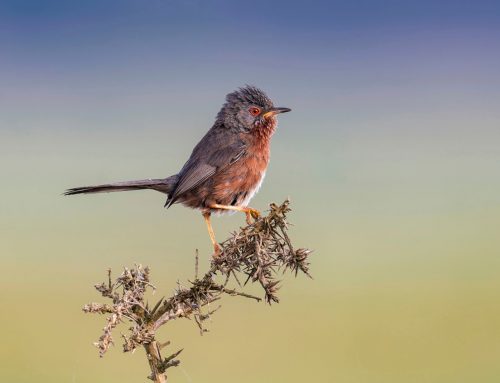
The RBBP collects data and reports upon all native species with UK breeding populations of fewer than 2,000 pairs. In addition, some species with higher populations are retained if RBBP data still provide reliable annual totals or if alternative surveys (such as the BTO/JNCC/RSPB Breeding Bird Survey) are unable to support the calculation of population trends. Species showing strong declines, but where the population is perhaps still above the 2,000 pair threshold, may be added in advance of them declining below the threshold. Note that some small passerines, such as Dartford Warbler, are susceptible to sudden population declines during long spells of particularly cold winter weather; although the populations can bounce back quite quickly during milder winters, we would need to be sure that the population remained consistently over 2,000 pairs before we considered removing the species from our lists.

Gadwall, Colin Bradshaw
We review the RBBP list at regular intervals to consider whether species should be added to or removed from the list. To date, a number of species have been removed as their populations have exceeded 2,000 pairs: Gadwall (last reported on for 2009), Red Kite (2012), Cetti’s Warbler (2016) and Firecrest (2017). Barn Owl, Crested Tit, Common Crossbill, Kingfisher and Leach’s Petrel were added to RBBP reporting in 1996 due to their Schedule One status, but then removed subsequently (after 2005) when it was evident that populations were considerably higher than 2,000 pairs, and the RBBP received relatively few data for most of these species
Scottish Crossbill, Water Rail and Willow Tit were removed (in 2009, 2017 and 2020 respectively) when improved data (e.g. from national surveys) demonstrated that the populations were well in excess of 2,000 pairs.

Woodlark, Colin Bradshaw
Two species have been removed from the RBBP list but then returned at a later date – Crested Tit which came off in 2005 and returned in 2020, and Woodlark which was absent from our reporting just three years between 2012 and 2016. We are keen to avoid species coming off and on the list in this way, so are cautious about removing species too hastily.
Recently, we have considered the status of a number of increasing species to see if removal from our list is merited. The figure below shows annual totals of Mediterranean Gulls and Avocets. Both species have exceeded 2,000 pairs in recent years; indeed, the 3,482 pairs of Mediterranean Gulls in 2023 is the highest number of any species the RBBP has ever reported. However, in both cases we have decided to continue collecting data, at least for the time being. Neither is well-monitored by any other monitoring scheme (hopefully coverage of Mediterranean Gulls by the BTO/JNCC Seabird Monitoring Programme will grow over time), and data collation is not particularly onerous given the colonial nature of both species means the number of sites occupied is relatively small, and they tend to be well-monitored. The increase in the Avocet population appears to have stalled around 2,200 pairs – not far above our threshold – and while there are many more pairs of Mediterranean Gulls, there are genuine concerns about the impact of High Pathogenicity Avian Influenza on the population, with the potential for numbers to crash. We will of course continue to review numbers of both species on a regular basis.

Trends in numbers (maximum total pairs) of Avocets and Mediterranean Gulls reported to the RBBP, 1973-2023
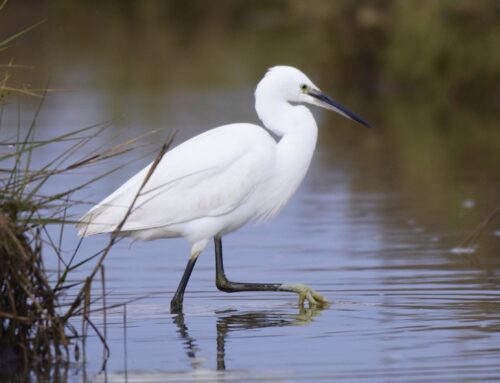
We have also discussed the status of Little Egret, which continues to increase with a new record of 1,696 pairs reported in 2023. A new analysis (to be published imminently) combining BTO Heronries Census data with RBBP data suggests that there is a considerable degree of under-reporting, and the true population may now exceed 2,000 pairs, but we will continue to collate data at least until our reported total passes 2,000. The same is true for Goshawk, which has increased very rapidly in recent years, and for which true numbers are suspected to be considerably higher than those reported.
Finally, we will review the status of Woodlark and Dartford Warbler – both species known to have exceeded 2,000 pairs in the UK in recent years – once the results of the 2025 Heathland Birds Survey are available.

Great Skua, Mark Eaton
At present there are no new species approaching our list from the other direction i.e. by decreasing to below 2,000 pairs, Numbers of Great Skuas fell dramatically following the severe HPAI outbreak in their breeding colonies in 2021 and 2022, but it is likely the population remained above 2,000 pairs, and is now showing signs of a slow recovery. Of course, new species also join our list by arriving to breed, or show signs of breeding, in the UK for the first time. Recent additions to the list of ‘potential’ breeders have included Little Bunting in 2022, Marsh Sandpiper, Elegant Tern and Dusky Warbler in 2021, and American Black Tern in 2020, and as most readers will be aware we have recently received our first confirmed breeding records of Glossy Ibis (2022), Blyth’s Reed Warbler (2024) and Zitting Cisticola (2025, although they had bred in the Channel Islands previously).

Hi Mark, please can you confirm that Black necked Grebe is de classified from RSPB Red Listed to Amber? Is that because the population is stable in the UK or has there been a slight increase?
Hi David – Black-necked Grebe has been amber-listed in all five Birds of Conservation Concern assessments; it’s never been red-listed.